


The Quick Read
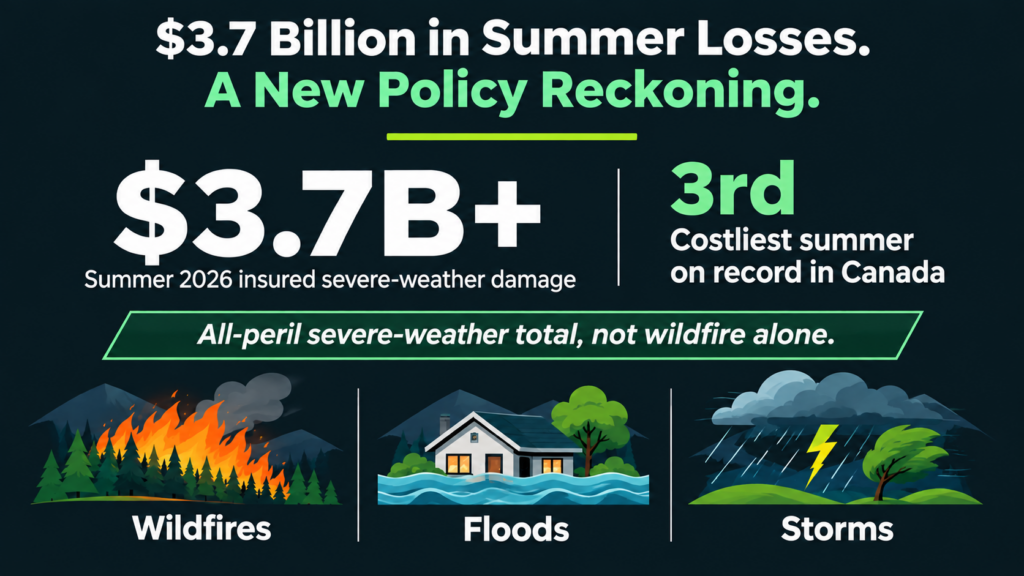
The Insurance Bureau of Canada (IBC) reported on October 22 that severe weather cost insurers more than $3.7 billion this summer, according to CatIQ estimates, making summer 2026 the third-costliest on record. Wildfires, including intense fires in British Columbia, sat alongside floods and storms in that total.
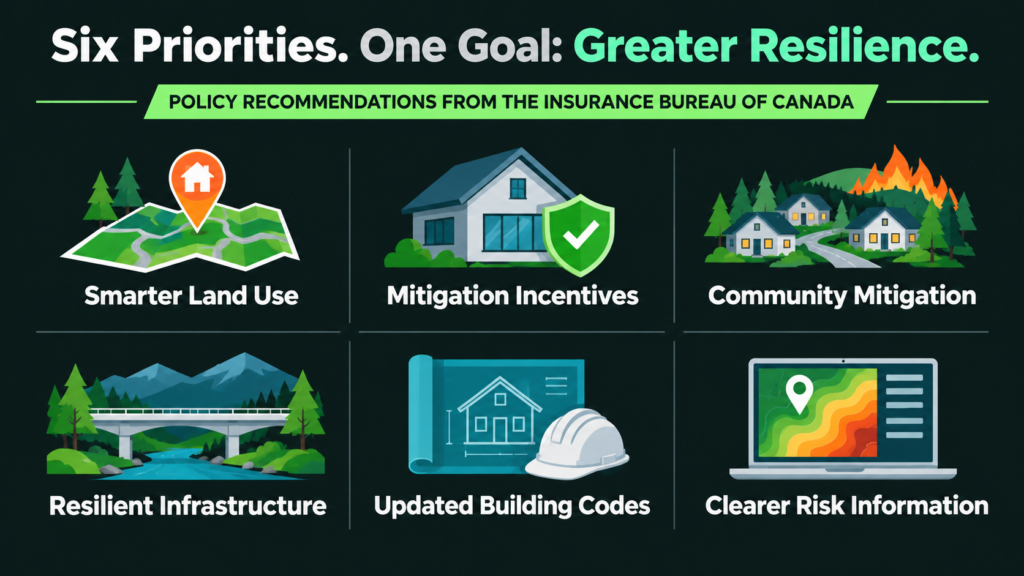
IBC paired the number with six specific asks of governments, including tighter land-use planning, mitigation incentives, community-level mitigation, updated building codes, and clearer risk information. For personal lines, commercial property and broker teams, the list is an early read on where wildfire policy and data expectations are heading.
How Property Guardian Helps: Our Canadian Wildfire Risk Score + Insights gives underwriters and portfolio teams a consistent, property-level view of wildfire exposure, which is the evidence base that land-use, code and mitigation-credit conversations will increasingly require.
Every few years, a loss number arrives that changes the tone of a policy conversation. This October, the number was $3.7 billion. That is the insured cost of summer 2026 severe weather in Canada, per CatIQ, and it makes this the third-worst summer on record. What stands out is not only the total. It is how specific the industry’s requests of government have become.
What IBC Actually Asked For
In its October 22 release, IBC called on all orders of government to act on six fronts. The first is to stop building new homes in high-risk flood and wildfire zones by tightening land-use planning and restricting development in the highest-risk areas. The second is to offer incentives for practical, affordable measures that reduce damage and recovery costs. The third is to require cost-effective community-level mitigation where building in high-risk areas cannot be avoided. The fourth is to invest in resilient infrastructure. The fifth is to update building codes so new homes reflect current and future climate conditions. The sixth is to give homeowners, renters and businesses clear information to assess and reduce their own risks.
IBC’s President and CEO, Celyeste Power, was direct about the limits of the industry’s role: “we cannot solve this issue on our own.” Insurers can price and pay, but they do not zone land or write codes.
Why the Wildfire Share of This Year’s Losses Is Not the Whole Story
It would be easy to read a $3.7 billion summer as a wildfire-driven loss. It was not, at least not primarily. The 2026 season burned a large area, with reporting in late summer putting the national total above 4.4 million hectares, but much of that burned in northern Ontario and Quebec, where insured property values are low. Ontario’s Thunder Bay 36 fire alone exceeded 300,000 hectares. Morningstar DBRS has noted that major Canadian insurers reported combined ratios below 95% in 2025 and the first quarter of 2026, and that wildfire losses are not causing severe hits to the sector.
The interface events tell a different story about what a bad outcome looks like. The Bald Range fire near Summerland and Peachland damaged or destroyed roughly 150 structures, and CatIQ’s first insured loss estimate is $313 million. That is under half the $720 million from the 2023 Okanagan and Shuswap fires, but it came from a season in which British Columbia burned about 43,000 hectares, well below its 10-year average. A below-average year by area still produced a loss in the hundreds of millions because the fire reached insured homes.
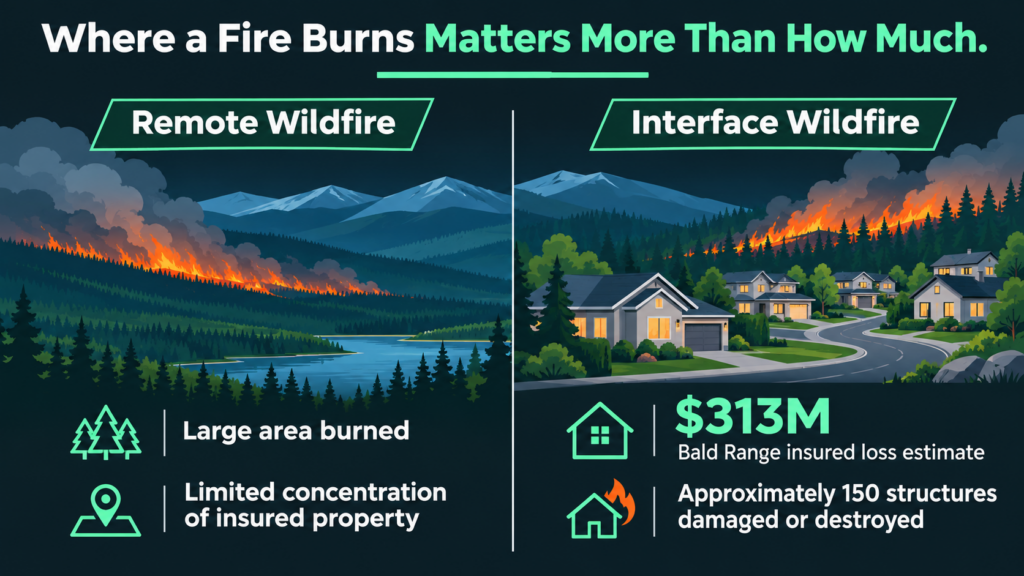
That is the quiet lesson behind IBC’s asks. Wildfire losses in Canada are less a function of how many hectares burn than of where those hectares sit relative to insured property.
How to Read the Policy Asks
Land-use restrictions, building-code updates and mitigation incentives all share one feature: each needs a way to say which properties and which neighbourhoods are in the highest-risk category, and how much a given improvement reduces that risk. A code change without a view of exposure is a blunt instrument. An incentive without a way to verify the work is hard to fund. A community mitigation requirement without a risk map is hard to target.
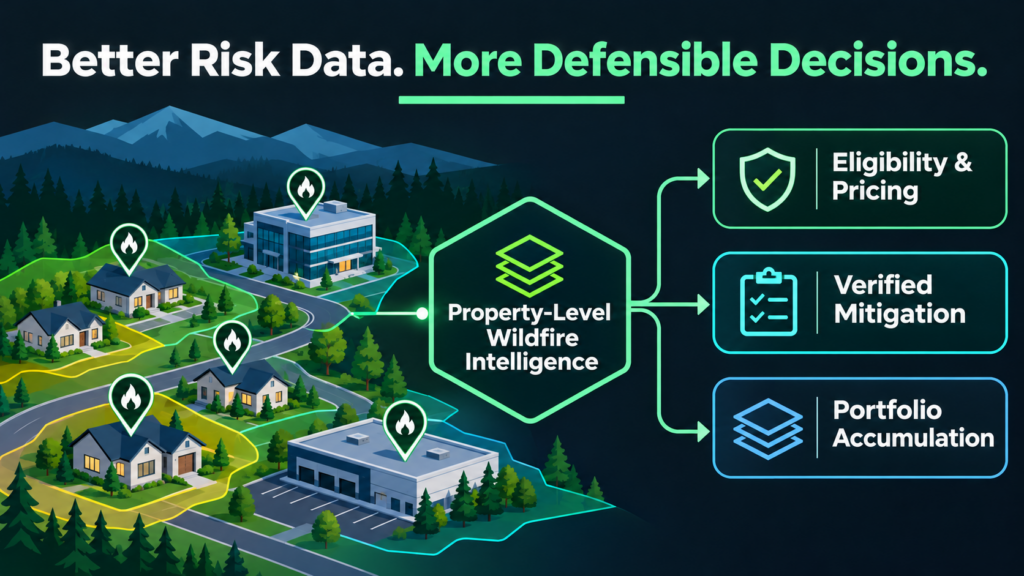
For insurers, that points to a likely direction of travel. Regulators, municipalities and reinsurers will increasingly expect carriers to show how they distinguish high-risk from low-risk locations, and to explain how mitigation affects pricing and eligibility. The industry is asking government to act on risk. Government is likely to ask the industry to show its work.
Practical Takeaways
- Personal lines (homeowner and residential): Product and underwriting leaders should review how wildfire is reflected in territory definitions and eligibility rules. If the policy conversation moves toward incentives for mitigation, carriers that can recognize verified mitigation at the property level will be better placed to participate. Pay particular attention to new-build and rebuild exposure in interface communities, where land-use and code changes will land first.
- Commercial property and specialty: Schedules with locations in or near wildland-urban interface areas deserve a fresh look at location-level data quality. Codes and land-use rules will vary by province and municipality, so construction and occupancy details matter more, not less.
- Brokers: Expect clients to ask what mitigation actually earns them. Having a clear answer, and the documentation to support it, will separate a useful broker conversation from a generic one.
- Reinsurers and corporate risk managers: Watch how provincial and federal responses develop. Policy that reduces new exposure in the highest-risk zones is slow, but it is the kind of structural change that matters to long-run accumulation.
Where Property Guardian Fits
Policy conversations about wildfire are only as good as the evidence underneath them. Property Guardian’s Canadian Wildfire Risk Score + Insights is built for the Canadian market and gives underwriting, portfolio and risk teams a property-level view of wildfire exposure they can use when discussing eligibility, mitigation credit or accumulation with regulators, municipalities, reinsurers and clients. As the policy asks become more specific, so will the need for consistent data behind them.
