

The Quick Read
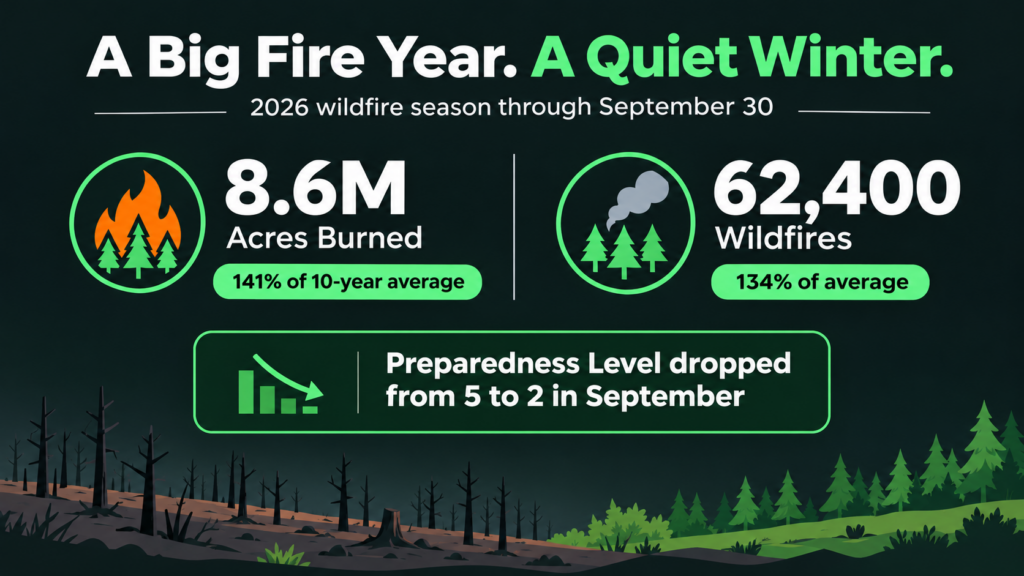
Through September 30, about 8.6 million acres had burned nationally, 141% of the 10-year average, across roughly 62,400 wildfires (134% of average), according to the National Interagency Fire Center’s October 1 outlook. The same outlook shows normal significant fire potential across most of the country from November through January, with above-normal potential in parts of east Texas, eastern Oklahoma, Kentucky and Tennessee in November.
A very strong El Niño is expected to persist into winter, and NIFC cites a 75% chance it becomes the strongest since 1950. Gallagher Re notes that a later shift toward La Niña has historically coincided with higher US insured losses, though those are averages across all perils and not forecasts.
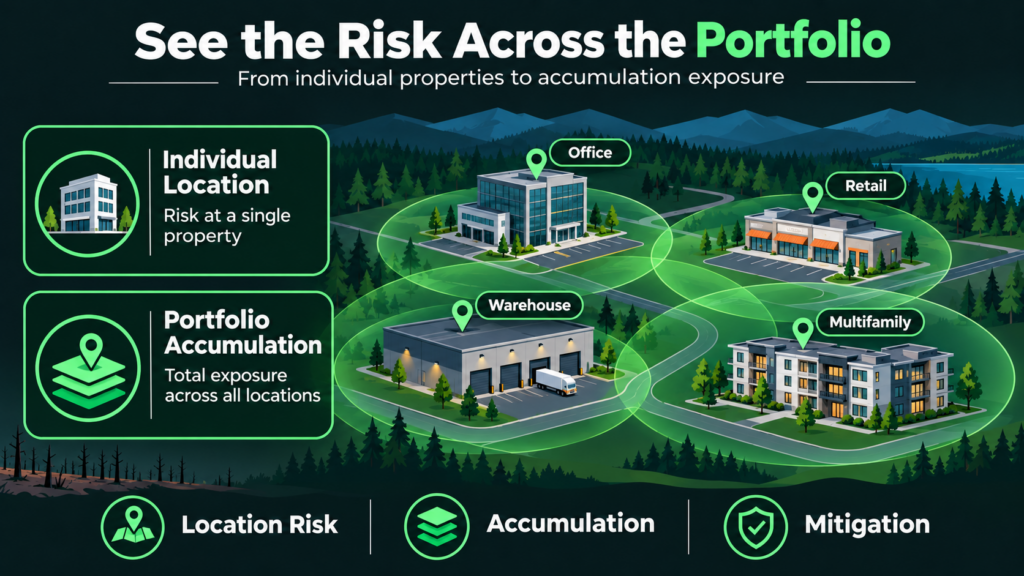
How Property Guardian Helps: Property Guardian’s portfolio-level exposure and accumulation views help underwriting and risk teams see where wildfire exposure clusters, so planning can happen while the fire season is quiet.
The 2026 fire year is not over just because most of the West has gone quiet. The quiet is what makes this the right moment to plan. A heavy season has just closed, a very strong climate pattern is in motion, and the next set of decisions for commercial portfolios, from renewals to accumulation reviews, will be made before the next season starts.
The Year in Numbers
NIFC’s October 1 outlook reports that, as of September 30, about 8.6 million acres had burned nationally, 141% of the 10-year average. About 62,400 wildfires had been reported, 134% of average. The National Preparedness Level fell from 5 to 2 during September, a sign of how quickly demand on firefighting resources eased as the season wound down.
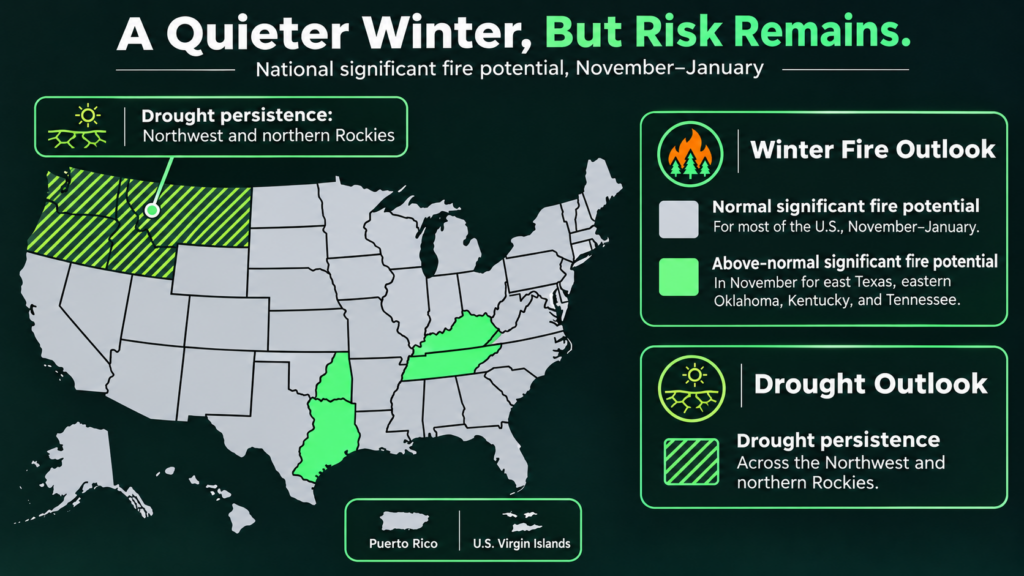
Drought remains widespread. The outlook notes that drought covered more than 59% of the country as of September 29, with about 12% in the extreme to exceptional categories. Persistence or expansion of drought is expected in the Northwest, the northern Rockies and the Upper Midwest, while improvement is expected in the southern West, the southern Plains, the Southeast and northern New England.
What the Winter Outlook Says
For most of the country, the near-term picture is calm. The outlook shows normal significant fire potential nationwide in January and across most areas in November and December. There are exceptions. In November, above-normal potential covers parts of east Texas and eastern Oklahoma, extending east into most of Kentucky and Tennessee, along with Puerto Rico and the U.S. Virgin Islands.
Southern California looks manageable this fall. The outlook expects near-normal conditions for the South Coast, below-normal Santa Ana wind activity, and moisture from Hurricane Marie that raised live fuel moisture in many areas. Widespread significant rain is expected by November through January. In the Southwest, November is expected to be drier than normal, with fire potential staying seasonally low through the winter.
One item from the Southern Area section is worth a second look. Central and southwest Texas carry heavy grass loading after two wet years, and the outlook says that warrants close watch. Early-October rain may green up grasses in Texas and Oklahoma, but the outlook expects that relief to be brief.
El Niño and the Question of What Comes Next
The climate driver behind the outlook is a rapidly strengthening El Niño. The outlook gives a greater than 95% chance that a very strong event continues into winter, and the Climate Prediction Center puts a 75% chance on it being the strongest since 1950. A strong El Niño generally brings wetter conditions to the southern tier and drier conditions to the northern Rockies and parts of the Great Lakes. A weakly negative Pacific Decadal Oscillation may temper some of the effect in the Southwest.
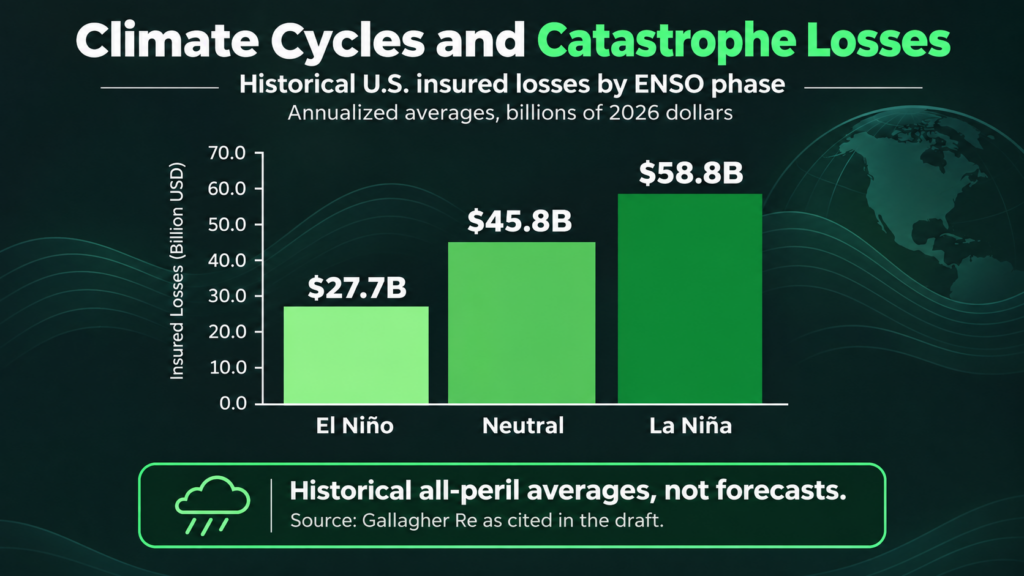
For commercial property, the longer-range question is what happens when the pattern shifts. A Gallagher Re report published in October notes that a possible move to La Niña later in 2027 has historically coincided with higher US insured losses. Its averages, in 2026 dollars, are about $27.7 billion annualized during El Niño, $45.8 billion in neutral years and $58.8 billion during La Niña. Gallagher Re is careful to say these are historical averages and not forecasts, and that losses within each phase have varied widely. They also cover all perils, not just wildfire.
The sensible reading is modest. Nobody can say from these numbers what the 2027 wildfire season will do. What the numbers do support is a reminder that conditions change, that fuels grow in wet years and cure in dry ones, and that a calm winter is not evidence about the next summer.
The Reinsurance and Rate Backdrop
The same Gallagher Re report says dedicated reinsurance capital reached a record of about $688 billion, and that reinsurers are entering January 1 renewals with strong appetite. Marsh reported that US commercial property rates fell 10% in the third quarter of 2026. Insured catastrophe losses for the first nine months were about $92 billion globally, 29% below the 2016 to 2025 average. For commercial property teams, that is a favorable setting for conversations about terms and capacity. It is also a setting in which wildfire-exposed locations are still priced on their own merits, so the quality of location-level information matters.
Practical Takeaways
- For underwriters. Use the quiet months to refresh accumulation views for the Northwest and northern Rockies, where drought is expected to persist, and for the Southern Plains, where grass loading is elevated. Look at where schedules cluster, not just where individual locations sit.
- For risk managers. Build renewal narratives around location-level evidence while carriers have capacity and appetite. Revisit business interruption and contingent exposure assumptions for locations in regions with persistent drought. Confirm that valuations reflect current rebuild costs.
- For operators of insured commercial properties. Winter is the practical time to complete vegetation management, roof and vent maintenance and other mitigation, and to document it. Work finished and recorded now is evidence at the spring renewal.
Closing Thought
A season that burned 141% of average acres has ended, and the outlook for the next few months is quiet for most of the West. The teams that tend to be best placed when conditions turn are the ones that used the calm to look at their portfolios as a whole.
Property Guardian’s portfolio-level exposure and accumulation views are built for this kind of off-season review, helping teams see where wildfire exposure concentrates across a schedule and what to do about it before the next season begins.
