


The Quick Read
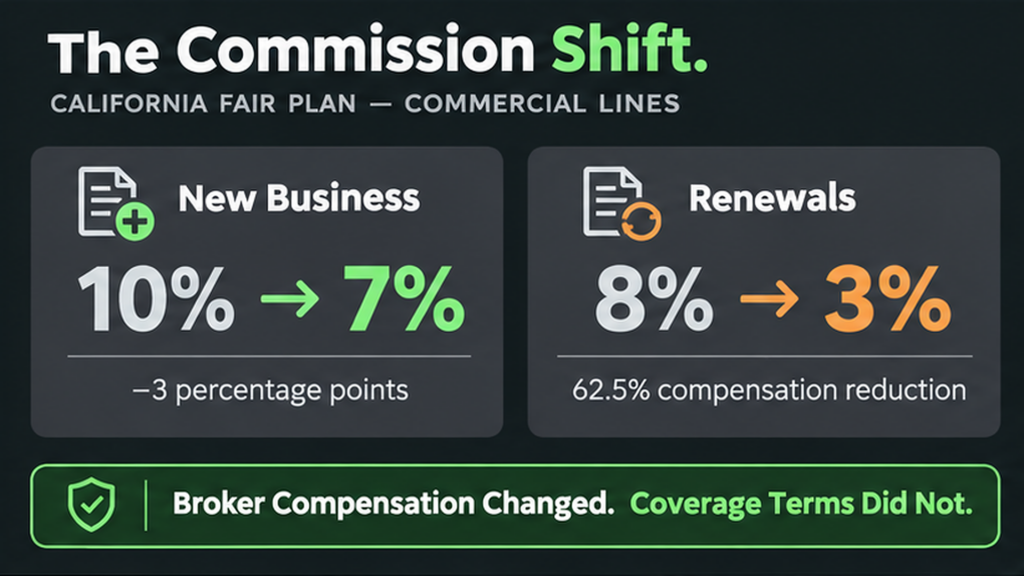
On October 15, 2026, new California FAIR Plan terms took effect that reduce broker commissions on its Commercial, Commercial High Value and Business Owners Policy lines. New business commission falls from 10% to 7%, and renewal commission falls from 8% to 3%. The widely reported 29.1% average rate increase is described as a dwelling figure; none of the sources we reviewed publish a separate commercial rate number.
Coverage limits and policy terms were not reduced, but the economics of placing and servicing FAIR Plan commercial business have changed. For commercial property teams with California exposure, that is a practical reason to build a credible private-market alternative now rather than at the next crisis renewal.
How Property Guardian Helps: Property Guardian’s wildfire risk insight reports give underwriters and brokers a property-level, evidence-based view of each location, which supports stronger submissions for private-market placement.
A commission cut is not a coverage cut. Still, when the economics change for the people who place and service business in a market, commercial property teams should pay attention. On October 15, 2026, new California FAIR Plan terms took effect, and the part that matters most to commercial portfolios is easy to miss in the headlines about rate increases.
What Changed
According to agency and broker summaries, commissions on the Plan’s Dwelling Fire, Commercial, Commercial High Value and Business Owners Policy lines were reduced for policies written on or after October 15. New business commission drops from 10% to 7%. Renewal commission drops from 8% to 3%, a 62.5% cut in broker compensation on renewals. California Earthquake Authority business is not affected.
The much-reported 29.1% average rate increase needs careful reading. KQED describes it as an average across the Plan’s roughly 675,000 to 700,000 customers, and broker summaries describe the approved figure as a dwelling rate increase. None of the sources we reviewed publish a separate commercial rate figure. Commercial teams should not assume the 29.1% applies to their schedules, and should not assume it does not. Ask your broker for the actual renewal quote.
What Did Not Change
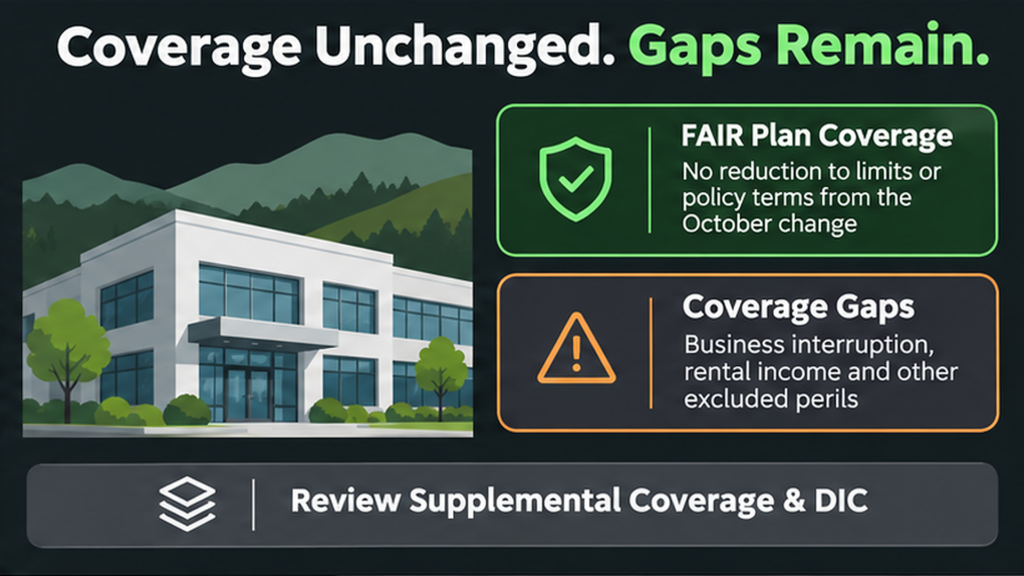
The same summaries state that coverage limits and policy terms were not reduced by the October changes. High Value Commercial limits are reported at up to $20 million per building. The structural gaps remain familiar. The commercial form is named-peril, and it typically excludes business interruption, rental income, flood, earthquake and equipment breakdown unless those are arranged separately. Many lenders require a Difference in Conditions policy to fill those gaps. For multi-building owners, per-building limits can also leave aggregate exposure above what the Plan will pay at a single location.
One timing detail deserves a flag. A single agency report states that the High Value Commercial policy is scheduled to sunset, with no new or renewal policies beginning after July 26, 2028. We could not confirm that date against a primary regulatory source, so treat it as a date to verify rather than a settled fact.
Why Commission Economics Matter to Risk Managers
Brokers respond to incentives like anyone else. A 3% renewal commission on a policy that is already labor-intensive to place and service may lead some brokers to spend less time on FAIR Plan accounts, or to steer clients toward alternatives. That can be good news if it prompts a long-overdue market review. It is a risk if it means thinner service on an account that, for some locations, is the only coverage available.
The backdrop is also different from a year or two ago. Marsh reported that US commercial property rates fell 10% in the third quarter of 2026, following a 13% drop in the second quarter, according to a Gallagher Re summary published in October. Reinsurers are heading into January 1 renewals with record capital. That softening is real, but it does not automatically reach wildfire-exposed locations. Underwriters still price the specific risk in front of them, and a submission that treats a wildfire-exposed building like an average building will not benefit from an average market.
A Note on SB 876
California also enacted SB 876, the Disaster Recovery Reform Act, which reforms claims handling after fire losses and takes effect January 1, 2028. Coverage of the law describes provisions aimed at residential policies and does not address commercial property. Commercial teams should watch for how the Department of Insurance treats commercial lines in later guidance, but should not assume those protections apply to them.
Practical Takeaways
- For underwriters. Expect more submissions from accounts that are leaving, or stress-testing, the FAIR Plan. Sort them by location-level evidence rather than ZIP code or broad hazard zone. Separate locations where mitigation is complete and documented from those where it is only promised. The FAIR Plan’s terms are also a useful benchmark for what an insured is comparing your quote against.
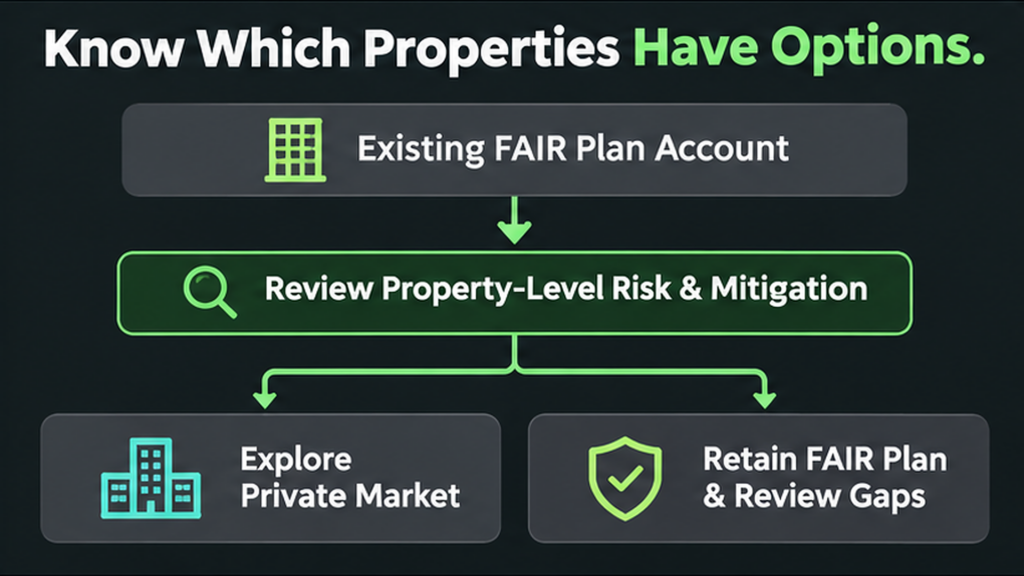
- For risk managers. Get the actual commercial renewal quote, and ask the broker in writing how the account will be serviced. Map which locations are realistic private-market candidates and which are likely to stay in the Plan. Confirm that a Difference in Conditions policy covers business interruption and rental income gaps. Put the possible July 2028 date on the calendar, after verifying it.
- For operators of insured commercial properties. Document mitigation work with dated photos and invoices. Make sure defensible space maintenance is current before renewal season, not after. Check lease and lender insurance requirements so a change of carrier does not create a compliance problem.
Where This Leaves Commercial Property Teams
Nothing about the October changes forces a move. They do change the incentives around the account, and incentives tend to show up in service levels before they show up in policy language. Teams that use a quiet period to assemble clean, location-level wildfire evidence will be in a better position, whether the next conversation is with the Plan, a surplus lines carrier or a new admitted market.
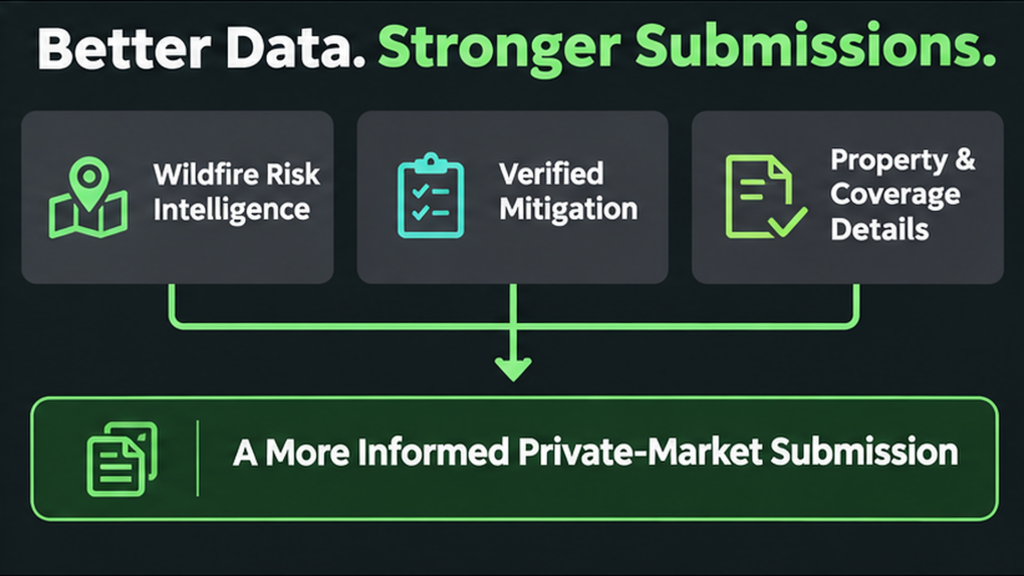
Property Guardian’s wildfire risk insight reports are built for that job. They give underwriters, brokers and risk managers a property-level view of wildfire exposure that can sit alongside a submission and support a clear conversation about price and terms.
Sources
FAIR Plan Changes for Landlords and Business Owners (Old Harbor Insurance, Oct 30, 2026).
An Agent’s Guide to California FAIR Plan Rate Increases (First Connect Insurance).
California FAIR Plan Announces 29.1% Rate Hike (KQED).
California Enacts Disaster Recovery Reform Act, SB 876 (Clyde & Co, Oct 2026).
Reinsurers enter January renewals flush as record El Nino builds (Insurance Business, Oct 22, 2026).
