


The Quick Read
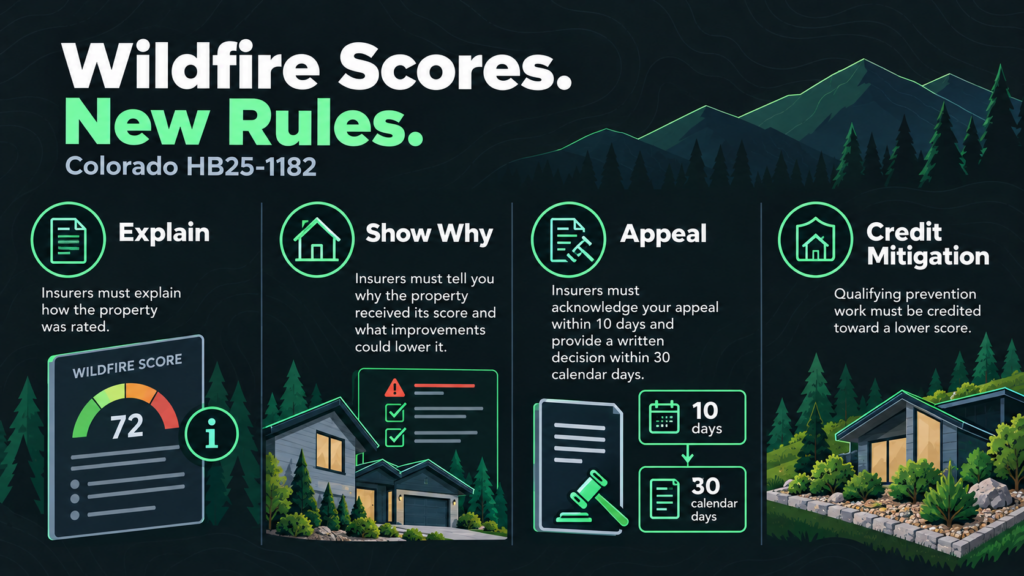
Colorado’s HB25-1182 took effect on October 1. Insurers that use wildfire risk scores, including the Colorado FAIR Plan, must now explain how a property was rated, tell the policyholder what improvements could lower the score, and credit qualifying wildfire prevention work. Policyholders can appeal a score they believe is wrong. Insurers must acknowledge a formal appeal within 10 days and issue a written decision within 30 calendar days.
Press coverage frames the law around homeowners, but the principle matters well beyond that market. Scores that can be explained, challenged and improved are becoming the expectation, and commercial property teams in wildfire-exposed states should assume the same questions will reach them. Teams with documented, property-level evidence will have the stronger hand.
How Property Guardian Helps: Property Guardian’s wildfire risk insight reports give underwriters and risk managers a documented, property-level view of conditions, which makes a score discussion or a mitigation credit request much easier to support.
Wildfire risk scores have quietly become one of the most influential numbers in property insurance. They shape whether a carrier will quote, what the deductible looks like, and how much a renewal moves. Until now, most policyholders have had little visibility into how those numbers are built. Colorado just changed that for part of its market.
What the Law Actually Requires
HB25-1182 took effect on October 1. It applies to Colorado-licensed insurers that use wildfire risk scores, and it explicitly includes the Colorado FAIR Plan. Local reporting describes four core obligations.
First, insurers must explain how they rate wildfire risk. Second, at application and at renewal they must tell the policyholder why the property received its score and what improvements could lower it. Third, policyholders can appeal a score they believe is wrong, and the clock is short: a formal appeal must be acknowledged within 10 days, with a written decision within 30 calendar days. Fourth, covered insurers must credit qualifying prevention work, such as clearing brush, removing pine needles and making structures more fire-resistant.
The Colorado Division of Insurance has also pointed to certification-linked savings. Homeowners with certain wildfire safety certifications may qualify for a 15% discount on the wildfire portion of the premium through CSAA General Insurance Company, although the reporting notes that discounts are not guaranteed and eligibility rules apply.
The Pressure Behind the Law
The political momentum is easy to understand. Teller County Commissioner Dan Williams told local media he has received hundreds of calls in recent years from residents who lost coverage, and some have seen costs triple or quadruple. That is the human version of a market in which carriers have tightened appetite, and a score the customer cannot see or contest feels arbitrary even when it is not.
Commercial buyers know the same tension. In July, a Burns & Wilcox broker told Insurance Business that carriers were restricting appetite for large condo associations and habitational risks in Colorado mountain communities, that some were not binding new policies within 20 to 50 miles of an active fire, and that standalone wildfire deductibles were becoming more common, in some cases up to $250,000 for large associations or set as a percentage for larger habitational risks.
Why Commercial Property Teams Should Pay Attention
It would be a mistake to read this as a homeowner story that happens to be in the news. A few points carry over directly.
Transparency tends to spread. Rules written for one line of business often become the template for others. A state that has told insurers to explain, disclose and accept appeals on personal lines has set a reference point that regulators, legislators and large buyers can cite when they look at commercial placements.
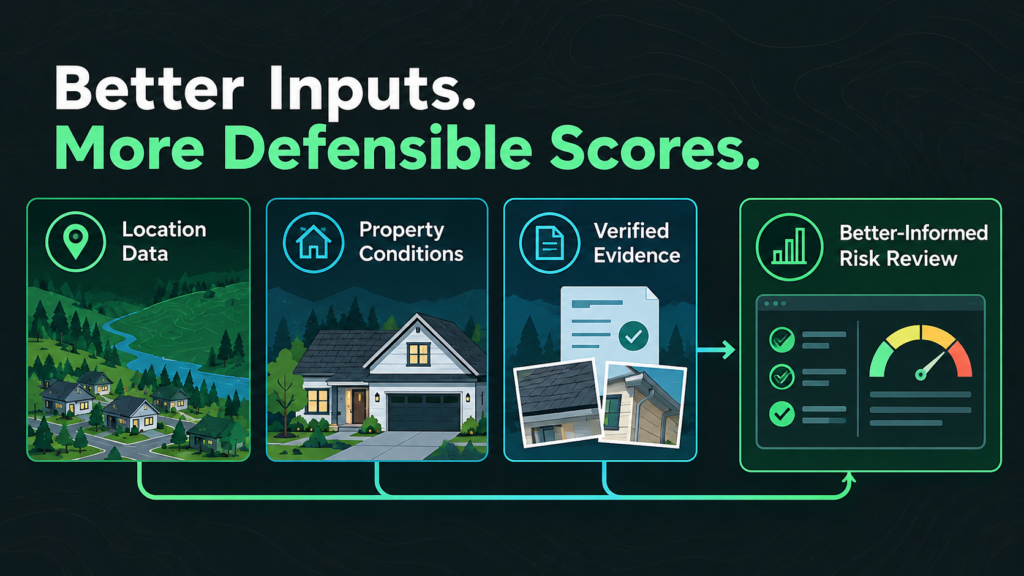
Scores are only as good as their inputs. A score is a model output built from data about a location and a structure. If the underlying data is outdated, generic or missing the work an owner has done, the score can overstate risk. The appeal right in Colorado exists because that happens. Commercial portfolios have the same exposure, often at larger scale and with more at stake per location.
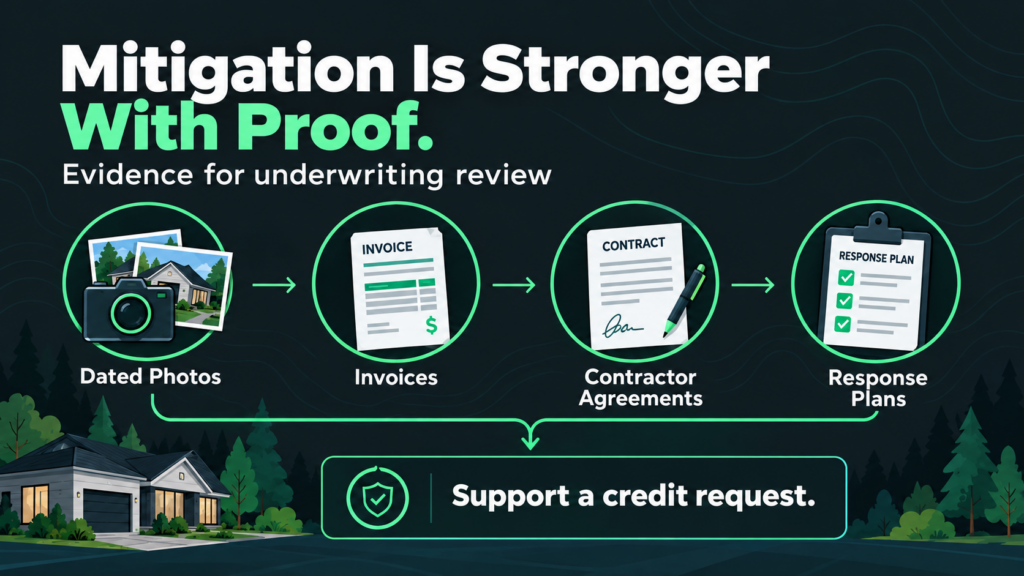
Mitigation only pays if it is provable. The same July broker commentary described a Durango-area association that kept a contractor on call to wet down the area and clear brush when fires were nearby. By documenting the contract and the response plan, it earned credits on its existing policy. The advice from that broker was to document the work and use it to negotiate premium relief. Colorado’s law now puts a statutory frame around that same idea: credit is owed for qualifying work, but someone has to show the work.
Residual markets are in the frame. Because the Colorado FAIR Plan is covered, the law touches the placement of last resort, where many wildfire-exposed commercial and habitational risks end up. The Plan offers basic coverage, and insureds can add wraparound policies to restore broader protection. Transparent scoring there matters to anyone building a layered program.
Practical Takeaways
- For underwriters: Be ready to explain the drivers of a wildfire score in plain language. If your appetite or pricing depends on a score, expect questions about its inputs, and build an internal path for reviewing evidence of mitigation. A faster, better documented review process is a competitive advantage with brokers.
- For risk managers: Treat your mitigation record as an asset that has to be organized. Keep dated documentation of vegetation management, ember-resistant upgrades, on-call contractor agreements and response plans. Ask your broker which improvements the carrier considers qualifying, and ask what the score was based on before you accept it.
- For property operators and managers: Maintenance is evidence. Routine tasks such as clearing debris from roofs and gutters, managing vegetation near buildings and keeping records of vendor visits can support a credit request if they are logged. Assign ownership of that record so it survives staff turnover.
- For brokers: Use the appeal and credit language as a conversation opener with Colorado clients, and build submission packages that lead with documented mitigation rather than leaving the carrier to infer it.
A Note on Scope
Coverage of the law so far has focused on homeowners, and the reporting reviewed for this post does not spell out how far the requirements reach into commercial policies. Commercial teams should confirm applicability with counsel or the Division of Insurance. The strategic point stands either way: the direction of travel is toward scores that can be explained and challenged.
How Property Guardian Can Help
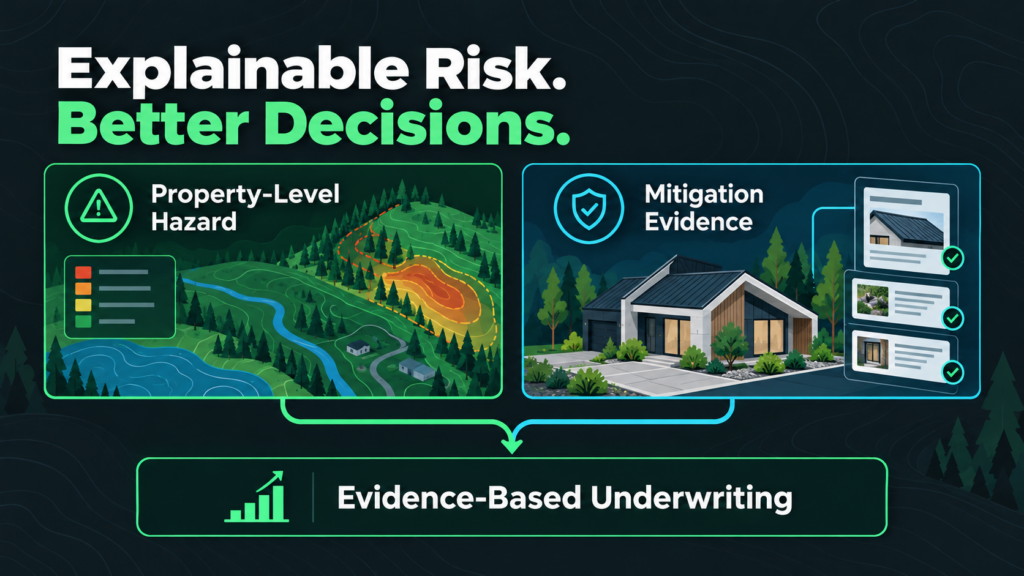
A score discussion is much easier when both sides are looking at the same facts. Property Guardian’s wildfire risk insight reports give underwriting teams and risk managers a documented, property-level view of the conditions that drive wildfire exposure, so mitigation work and site characteristics can be reviewed on evidence rather than assumption. If your team is preparing for tougher questions about wildfire scoring, we would be glad to compare notes.
Sources
KKTV, “New Colorado law could help homeowners save on wildfire insurance costs,” October 16, 2026.
