

The Quick Read
Southern California Edison CEO Pedro Pizarro is publicly pressing state lawmakers to call a special legislative session before the end of 2026 to reset how wildfire liability is assigned and paid when utility equipment ignites a fire. The push follows a failed attempt last month to pass a compensation framework, a negative outlook from Fitch on SCE’s credit, and a stock selloff across California’s investor owned utilities, all tied back to the billions of dollars in claims still working through the courts from the January 2025 Eaton and Palisades fires.
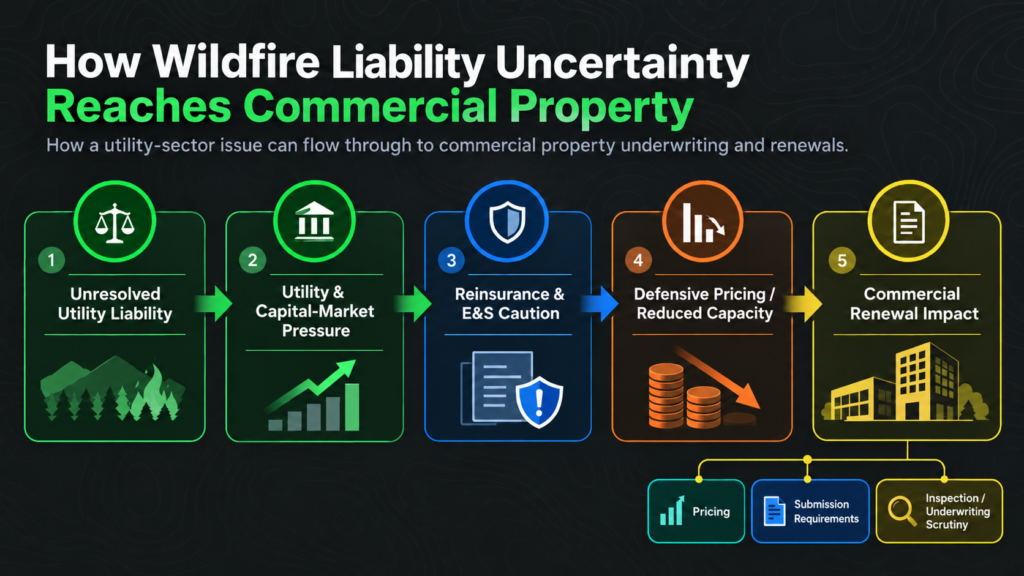
For commercial property underwriters and risk managers, this is not a utility story. It is a pricing and availability story. Every month California goes without a durable liability framework is a month that reinsurers, E&S carriers, and the FAIR Plan price in more uncertainty, and uncertainty does not stay contained to homeowners policies. It shows up in commercial renewal terms, in scrutiny of wildfire-adjacent portfolios, and in how long it takes to get a quote on a property near utility infrastructure in a high-risk zone.
How Property Guardian Helps: Property Guardian’s wildfire risk insight reports give underwriters and risk managers property-level, defensible data on ignition and exposure factors, independent of how the legislative liability picture eventually resolves, so pricing and placement decisions can move forward even while Sacramento works out the politics.
Why This Is Happening Now
Pizarro’s ask is specific and time-bound. He wants lawmakers to convene a targeted special session before the November elections, arguing that waiting until a new legislative session opens in January means starting over with legislators who have not lived through the last two years of wildfire litigation and utility financial stress. Governor Gavin Newsom’s term ends in January 2027, which adds another layer of urgency: the officials with the most institutional knowledge of this issue are on a clock of their own.
The immediate catalyst is the collapse of a compensation bill last month. Lawmakers could not agree on how to balance fair, timely payouts to wildfire victims against the financial exposure utilities like SCE and PG&E carry when their equipment is found to have sparked a fire, a standard shaped heavily by California’s inverse condemnation doctrine, which can hold utilities liable for wildfire damage from their equipment even without a finding of negligence. That failure had immediate financial consequences. California utility stocks dropped in its wake, and Fitch moved SCE’s outlook to negative, a signal that raises the cost of capital. Pizarro has said the resulting uncertainty is adding hundreds of millions of dollars in debt costs, expenses that ultimately flow through to ratepayers and to the broader cost structure of doing business in the state.
Behind the immediate political maneuvering is a much larger number: the Eaton and Palisades fires of January 2025, which killed more than two dozen people and generated tens of billions of dollars in property and economic losses, the largest insured wildfire loss event on record. Thousands of lawsuits tied to those fires are still working their way through the courts, and how those claims are ultimately resolved, along with how future claims will be handled, is exactly what a new liability framework would need to settle.
What This Means for Commercial Property Teams
Most commercial risk managers do not think of utility liability law as part of their job. It should be, at least peripherally, for three reasons.
First, liability uncertainty is a pricing input. Reinsurers and E&S markets do not like open questions about who ultimately pays when a fire starts. Every quarter this framework stays unresolved is a quarter that gets baked into renewal terms for commercial property in and around wildfire-prone utility corridors, whether the loss came from utility equipment or not, because the uncertainty affects the broader risk pool insurers are pricing against.
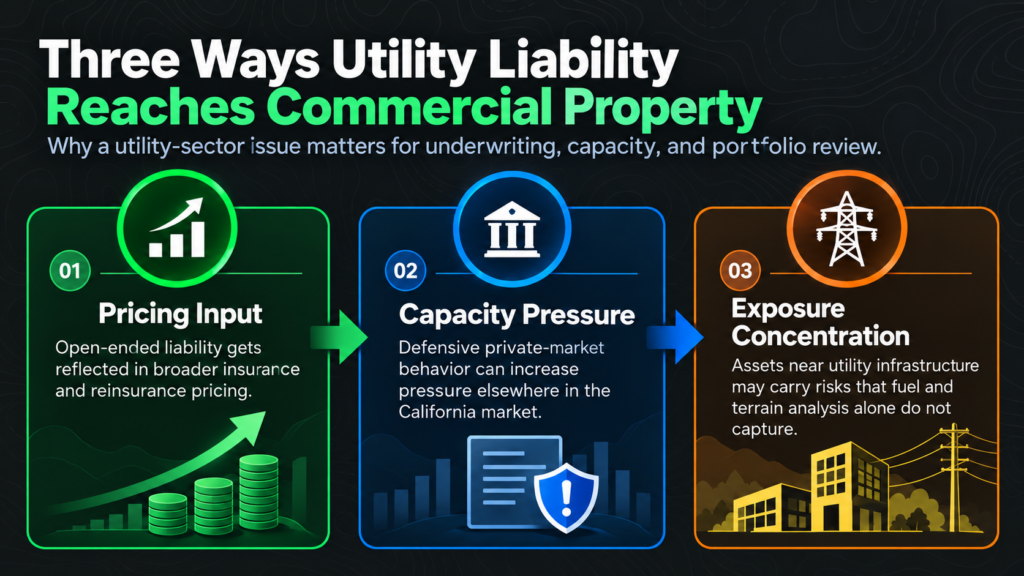
Second, this is a leading indicator for FAIR Plan pressure. When private capacity pulls back or prices defensively because of unresolved liability questions, more risk gets pushed toward the FAIR Plan and its commercial equivalents, which in turn raises assessment exposure for every admitted carrier writing in the state, a cost that eventually surfaces in the broader market.
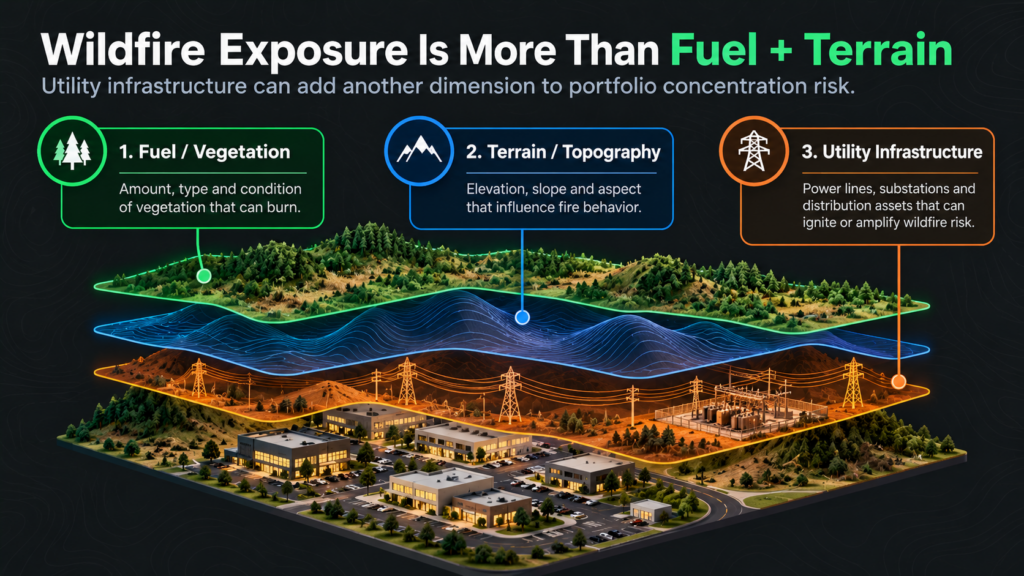
Third, and most practically, this is a signal to revisit exposure concentration. Properties located near transmission and distribution infrastructure in high fire-risk areas carry a layer of risk that is distinct from vegetation and topography alone. Portfolio reviews that only map fuel and terrain are missing part of the picture. Risk managers with assets clustered along known utility corridors in Southern California should treat this as a prompt to flag those locations for closer underwriting scrutiny now, rather than waiting for a renewal surprise.
What to Watch Next
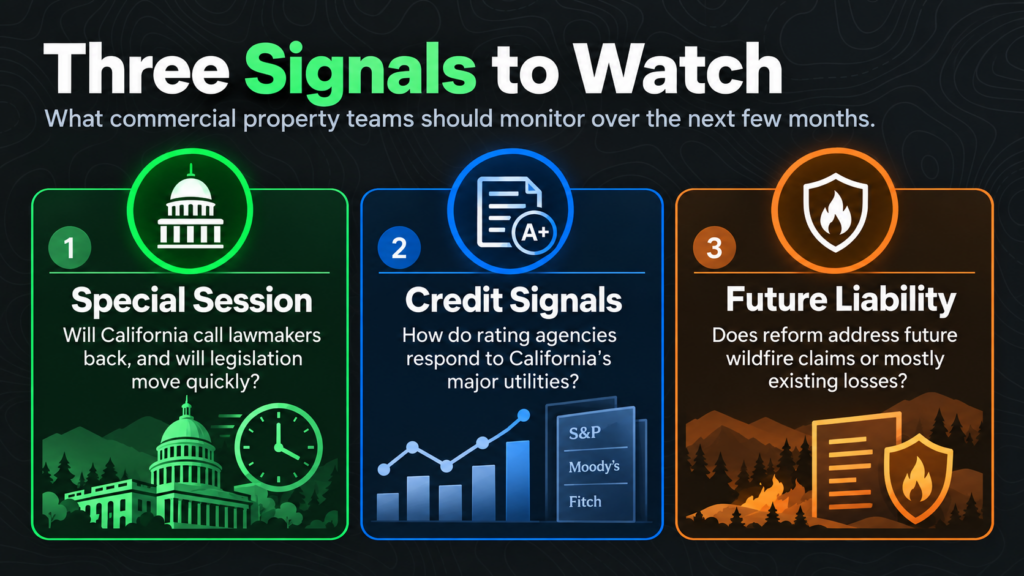
There are three concrete signals worth tracking over the next few months. The first is whether a special session actually gets called, and if so, how quickly a bill moves through it; a fast-moving session suggests legislators see the financial stakes as urgent, while another stall suggests the uncertainty premium persists into 2027. The second is how rating agencies treat the other major California utility, PG&E, which carries its own wildfire liability history and a comparable stake in the outcome; a downgrade there would be a stronger signal of systemic stress than SCE’s outlook change alone. The third is whether any resulting framework addresses future fires prospectively or only settles past claims, since a framework that only cleans up existing litigation without changing how future liability is assigned leaves the same uncertainty in place for the next fire season.
Property and casualty markets tend to price in ambiguity conservatively. That is a rational response to an unresolved legal and legislative picture, but it also means commercial property teams do not need to wait for a final bill to start adjusting how they think about exposure. The properties most likely to feel indirect effects first are those in or near recognized utility wildfire risk corridors in Southern California, where insurers and reinsurers already apply heightened scrutiny and where any further liability uncertainty is most likely to show up first in submission requirements, inspection contingencies, or pricing.
The Practical Takeaway
None of this means commercial property teams should expect an immediate insurance market shock. Reforms of this kind typically move slowly, and the outcome of any special session is far from certain. But the direction of travel matters. A resolved, durable liability framework, one that gives utilities, insurers, and capital markets confidence about how future wildfire claims will be handled, would be a stabilizing force for the entire California property market, commercial included. An unresolved one keeps a persistent risk premium in place.
“An unresolved liability framework keeps a persistent risk premium in place.”
The practical move for underwriting and risk management teams is to track this alongside the more familiar signals, like reinsurance renewal pricing and FAIR Plan growth, rather than treating it as a separate utility-sector issue. Ask brokers and carriers directly whether proximity to utility infrastructure is factoring into terms on renewals in the affected regions, and build that question into portfolio reviews for California-exposed accounts over the next two quarters.
Property Guardian will continue to track how this legislative push develops and what it means for commercial property risk transfer in California.
