
July 9, 2026 — The Babylon Fire, burning across federal lands in San Juan County, Utah, is currently the largest active wildfire in the United States. As of Wednesday, July 8, it had burned 101,073 acres — more than 157 square miles — and reached its first containment milestone at 11%. The fire started the afternoon of June 26 on lands that include portions of Bears Ears National Monument and the Monticello Ranger District of the Manti-La Sal National Forest, about 25 miles southwest of Monticello. Its cause remains under investigation.
Crossing 100,000 acres puts the Babylon Fire in official “megafire” territory — the first wildfire to do so in Utah in eight years, and a marker of just how extreme this fire season has become across the state.
Timeline
The fire moved fast from the start. By June 28, red-flag conditions pushed it to roughly 16,000 acres; by June 29 it had grown to nearly 38,400 acres. It kept climbing through the first week of July, reaching about 96,500 acres and 0% containment by July 6, then surpassing 101,000 acres by July 8 as crews finally carved out the fire’s first containment lines — concentrating on the northern perimeter using infrared mapping to locate and extinguish hidden heat pockets, plus night operations to add capacity in the most active zones.
Isolated showers on the evening of July 7 offered brief relief, moderating fire behavior into the morning of July 8 — but officials cautioned that hot temperatures, erratic winds, atmospheric instability, and bone-dry fuels could push active fire behavior right back up.
Conditions Driving the Fire
Utah is in statewide drought, and many of its weather stations are recording their warmest year on record. That combination — parched fuels and record heat — is why containment has been so hard to hold. Crews on the northeast corner near Shay Mountain have been fighting steep terrain and winds pushing fire through dry timber simultaneously, a mix that turns routine mop-up into an ongoing fight just to hold ground already won.
It isn’t an isolated event. Twelve large fires are currently burning across Utah, and the state has already burned more than 565 square miles in 2026 — more than the previous five years combined, with more than half the year still ahead. The Babylon Fire is burning alongside the Cottonwood Fire, itself over 150 square miles and responsible for destroying more than 100 condos and 30 cabins at Eagle Point Ski Resort.
Human and Community Impact
Five structures have been destroyed, including a historic cabin in Mormon Pasture. Six San Juan County zones — CY-1, CY-2, Peters Hill West, Airport, Energy, and SJC-1 — remain under SET status, a pre-evacuation notice directing residents to gather belongings, secure records, and have an evacuation destination ready. The city of Monticello itself has been placed on a heightened evacuation alert.
Public land closures now extend through August: all National Forest lands, roads, and trails in the Monticello Ranger District are closed, the Needles District of Canyonlands National Park is fully closed, and the Bureau of Land Management has closed a large swath west of Harts Draw Road through the Indian Creek Corridor, including Shay Mesa, Beef Basin, Dark Canyon, and the Sweet Alice Wilderness Study Area. Smoke from the fire has been visible from space and continues to blanket Monticello and surrounding communities.
More than 1,353 personnel are assigned to the response, backed by 68 engines, 22 helicopters, four dozers, and 21 water tenders — supplemented by local agencies including Grand County EMS and the Moab Valley Fire Department.
Historical Context
The Babylon Fire is not Utah’s largest wildfire on record — that distinction still belongs to the 2007 Milford Flat Fire, which burned 363,052 acres. It is, however, now in the same tier as the state’s next-largest fires: the Clay Springs Fire (107,847 acres) and the combined Pole Creek/Bald Mountain Fire (roughly 105,000 acres). At 101,073 acres and still growing, Babylon is on track to rank among Utah’s four largest wildfires in recorded history — and the first in eight years to reach megafire scale, underscoring how much more volatile Utah’s fire seasons have become as drought conditions compound year over year.
What This Means for the Industry
Fires like Babylon expose the limits of static, annually-updated risk models. A property that looked defensible in a spring underwriting cycle can sit inside a pre-evacuation zone by summer, and a control line that held for a week can be overrun by a single red-flag wind event. Real-time monitoring — heat detection, live weather forecasting, topography, and fuel-load data layered together — is what turns a reactive claims process into a proactive one, giving carriers and portfolio managers a live view of exposure rather than a static snapshot.
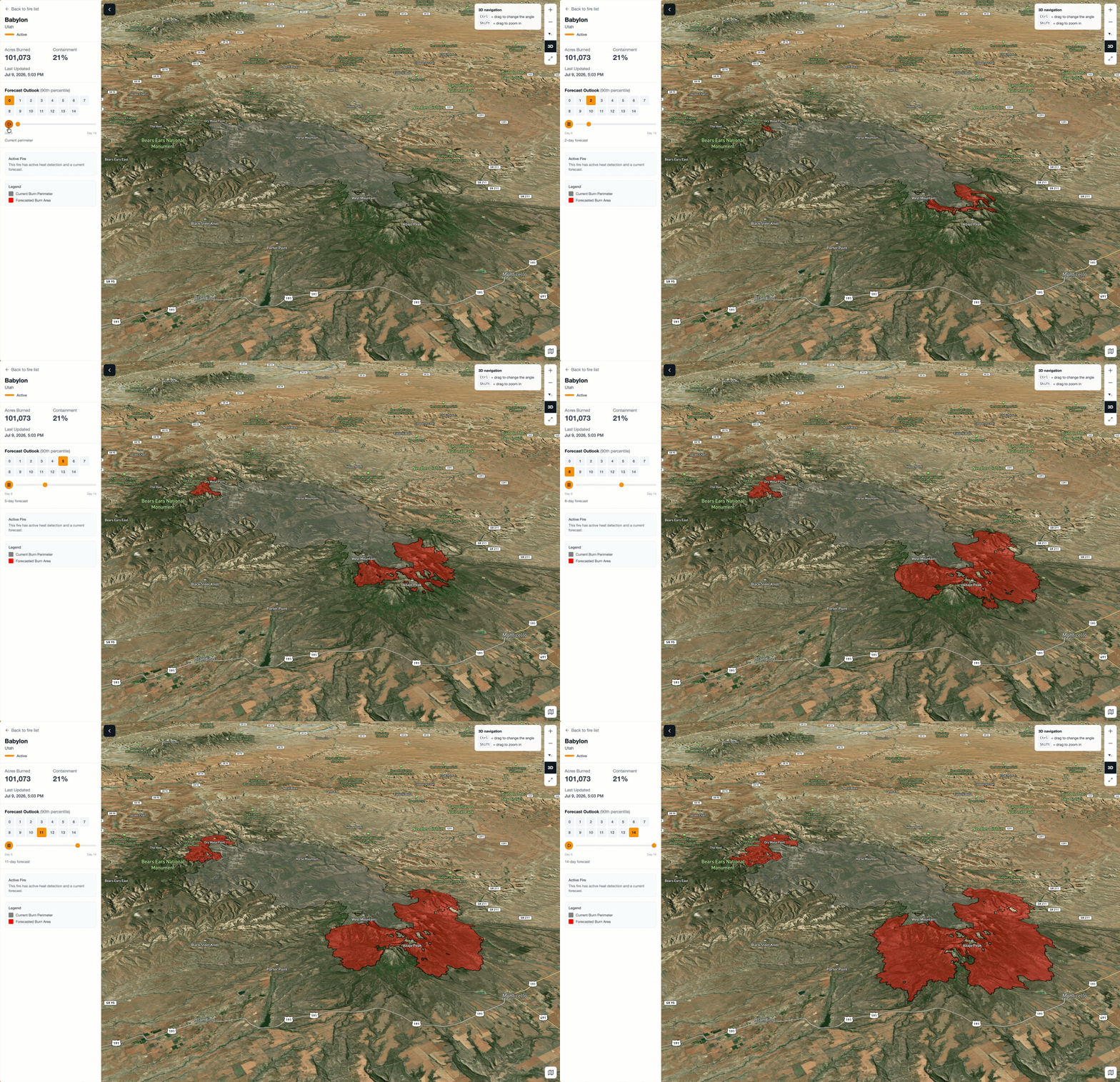
This is exactly the gap Property Guardian’s Overwatch platform is built to close: continuously ingesting satellite heat detection, weather forecasts, terrain, and fuel conditions to project where a fire is headed — not just where it’s already been.
Forward Look
With containment still in the single digits on the fire’s most active flanks and hot, erratic winds in the forecast, the Babylon Fire’s growth is likely to continue tracking the terrain and fuel corridors northeast toward Shay Mountain and through the dry timber stands that have driven its fastest runs so far. Overwatch’s current forecast models this spread based on live heat detection, the latest weather outlook, topography, and fuel conditions — intelligence carriers and risk managers need now, not after the next containment report.
Sources
ABC4 — Babylon Fire becomes largest wildfire in the U.S.
Gephardt Daily — Babylon Fire tops 101K acres, now 11% contained
The Times-Independent (Moab Times) — Babylon Fire reaches first containment
Salt Lake Tribune — Babylon Fire grows to 96,500 acres
Weather.com — Hundreds of homes lost as massive wildfires rage in Colorado, Utah
Climate Signals — Top 5 largest Utah wildfires in the past 10 years
