
• Skip to main content
  • Skip to header right navigation
  • Skip to site footer

One Year Since the Palisades & Eaton Wildfires: Remembering, Honoring, Rebuilding: Read More

A green hexagon logo with a shield and cityscape design, next to the text “PROPERTY GUARDIAN” and below it, “A Green Shield Company” on a light gray background.

Property Guardian

  • About Us
    • About Us
    • Our Team
    • Our Partners
  • Solutions
        • Risk & Insurance Solutions

        • Underwriting
        • Loss Control
        • Portfolio Insights
        • Real Estate Solutions

        • Property Guardian InsurAble
        • Commercial Property Owners
        • View All Products
  • Resources
    • Brochures
    • White Papers & Case Studies
    • Videos
  • News
  • Contact Us
    • Contact Us
    • Support
    • Request a Demo
  • Request a Demo
  • LinkedIn
  • YouTube
  • LinkedIn
  • YouTube
Request a Demo
Smoke drifts through a forest with charred trees, creating a hazy atmosphere. The ground is darkened, and the scene suggests a recent fire with lingering smoke among the silhouettes of the tree trunks.

When the Fire Behaves Like a City Firestorm: What the Public Often Misses About Firefighting Efforts

January 13, 2026

By Mike Thayer, Senior Wildfire Consultant

In the wake of the Palisades Fire, there has been a lot of discussion, and a lot of media coverage, about the firefighting response. Some of it is fair. Much of it lacks critical context. If we want to learn from this fire and improve outcomes the next time, we need to be honest about what an urban conflagration is, what it demands, and what today’s systems can (and cannot) do under extreme conditions.

An Urban Conflagration Is a Different Problem Than a “Typical” Wildfire

There are realities about fires like the Palisades Fire that often don’t make it into public conversation:

  • There is no standard training curriculum that teaches firefighters how to manage an urban conflagration. Firefighters train extensively, but when hundreds or thousands of structures are threatened at once, we’re dealing with a different operational environment.
  • Water infrastructure systems were never designed for this. Decades-old systems are not designed for urban conflagration, and cannot handle hundreds or thousands of homes to be on fire at the same time.
  • Aerial suppression has major limitations in extreme winds. The technology does not exist to consistently deliver water or retardant with accuracy when wind conditions are severe.
  • Long-range spotting can outpace intervention quickly. Embers can ignite new fires over a wide geographic area faster than firefighting resources can reach and contain them.

Santa Ana Winds in the Santa Monica Mountains Create Predictable Outcomes

When a wildfire ignites in the Santa Monica Mountains west of the 405 freeway during intense Santa Ana winds, it will go to the ocean almost every time. Under those conditions, 50-100 foot flame lengths are common, and that level of fire behavior cannot be directly engaged by firefighters.

At that point, operations often shift to what is possible and safe:

  • Point protection where conditions allow
  • Following the fire front and taking action in the wake of the head fire

That’s not a lack of effort. It’s the reality of physics, wind, terrain, and fire behavior converging.

Success Stories Often Get Overlooked

Given how extreme and destructive this wind-driven event was, it’s easy to lose sight of what went right. After reading the recently released IBHS report, I saw examples of homes that were saved by firefighters under extreme conditions. I also saw accounts of homeowners being rescued and evacuated in near blackout visibility — work that deserves recognition.

Extraordinary efforts by aerial and ground resources also helped keep the fire out of Topanga Canyon proper and Mandeville Canyon, likely saving thousands of additional homes. And just as importantly, these operations were carried out with minimal firefighter injuries, despite the severity of the event.

A Critical Comparison: 1993 vs. Today

The 1993 Old Topanga Fire burned in much of the same terrain and produced 565 firefighter injuries and nine separate entrapments. We’ve made meaningful progress since then. Improved training, PPE, and communications contributed to only one confirmed firefighter injury during the Palisades Fire. That matters. It reflects how far firefighter safety and operational capability have advanced, even as the hazard itself becomes more extreme.

Can Outcomes Improve Next Time? Absolutely, but Everyone Has a Role

Yes, we can improve outcomes in the next conflagration event. But it will take the efforts of everyone, including homeowners.

Multiple studies from the January fires and other recent conflagrations indicate that vegetation pathways between homes are a primary contributor to fire spread. That’s why the push for a noncombustible 5-foot zone around the home (“Zone Zero”) is so important. It may seem drastic, but catastrophic events require catastrophic reform.

And while the Zone Zero code continues to get punted down the road, homeowners don’t need to wait for regulation. The time to act is now.

What Property Owners Can Do Right Now

If you’re looking for practical steps that help reduce risk:

  • Create a noncombustible 5-foot zone around the home (remove mulch, stored items, wood piles, and other fuels)
  • Install ember-resistant vents and seal vulnerable gaps where embers can enter
  • Keep roofs and gutters clear; remove leaf litter and debris regularly
  • Maintain defensible space and reduce vegetation pathways that allow fire to move structure-to-structure

If we want better outcomes, we need to match the scale of the hazard with the scale of our preparedness. Firefighting matters, but in urban conflagrations, community-level conditions and home hardening can determine whether a fire becomes a disaster.


Share this post:
Category: Blog
A smiling man with short gray hair and glasses is wearing a black blazer over a gray shirt. The background is a soft gradient from dark to light gray.

About Mike Thayer

Mike is a National Fire Protection Association Certified Wildfire Mitigation Specialist with 13 years of wildland firefighting experience. He served eight years at AIG Private Client Group as a Field Manager and Wildfire Mitigation Specialist, where he provided mitigation solutions to numerous homeowners and conducted wildfire mitigation continuing education training for hundreds of brokers and clients. During this time, Mike also responded to numerous large wildfires, providing mitigation and firefighting actions to help protect millions of dollars in to total insurable value.

Sidebar

Recent Posts

  • When the Fire Behaves Like a City Firestorm: What the Public Often Misses About Firefighting Efforts
  • One Year Since the Palisades & Eaton Wildfires: Remembering, Honoring, Rebuilding
  • Property Guardian and Allied Disaster Defense Partner to Scale Data-Driven Wildfire Mitigation and Monitoring
  • Information Providers, Inc. Selects Property Guardian to Power Wildfire-Specific Virtual Inspections
  • BurnBot and Property Guardian Partner to Deliver Data-Driven Wildfire Mitigation and Property Risk Resilience

Categories

Stay in the Know!

Stay connected with the Property Guardian team! Subscribe to get the latest updates on product launches, feature enhancements, wildfire news, expert mitigation tips, and much more. Don’t miss out on the insights that matter most!

Our Latest Posts

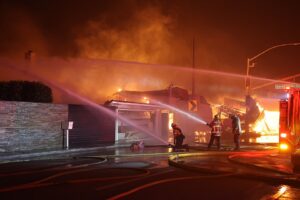
Firefighters spray water on a burning building at night, with heavy smoke and flames visible. Emergency lights shine, and hoses are spread across the wet street as crews work to control the blaze.
Category: Blog

When the Fire Behaves Like a City Firestorm: What the Public Often Misses About Firefighting Efforts

Silhouettes of palm trees and buildings are set against a dramatic, fiery orange sunset sky, casting an intense glow over an urban cityscape.
Category: Blog

One Year Since the Palisades & Eaton Wildfires: Remembering, Honoring, Rebuilding

Two company logos: on the left, Property Guardian with a green shield icon; on the right, Allied Disaster Defense with a red triangle containing a blue flame and water drop. Both logos are on a light gray background.
Category: Press Release

Property Guardian and Allied Disaster Defense Partner to Scale Data-Driven Wildfire Mitigation and Monitoring

Ready to Get Started?

Let us guide you through a personalized demo and create a customized solution that perfectly aligns with your needs. Protect what matters most with a solution built for you.

Request a Demo

Stay in the Know!

Stay connected with the Property Guardian team! Subscribe to get the latest updates on product launches, feature enhancements, wildfire news, expert mitigation tips, and much more. Don’t miss out on the insights that matter most!

Home

About Us

Our Team

Partners

Request a Demo

Contact Us

Risk & Insurance Solutions

Underwriting

Loss Control

Portfolio Insights

Property Guardian InsurAble

Solutions for Communities

Solutions for Commercial Property

All Products

Resources

Brochures

White Papers & Case Studies

Videos

  • LinkedIn
  • YouTube
A green hexagon logo with a shield and cityscape design, next to the text “PROPERTY GUARDIAN” and below it, “A Green Shield Company” on a light gray background.

Headquarters:
2551 N Clark St., Suite 302
Chicago, IL 60614

Copyright © 2026 · Property Guardian · All Rights Reserved · Terms of Use · Privacy Policy· Trust Center

By using this website, you agree to our use of cookies. We use cookies to provide you with a great experience and to help our website run effectively. To find out more, please read our Privacy Policy.